32-inch gravel bike spotted during Eddy’s Gravel Ride
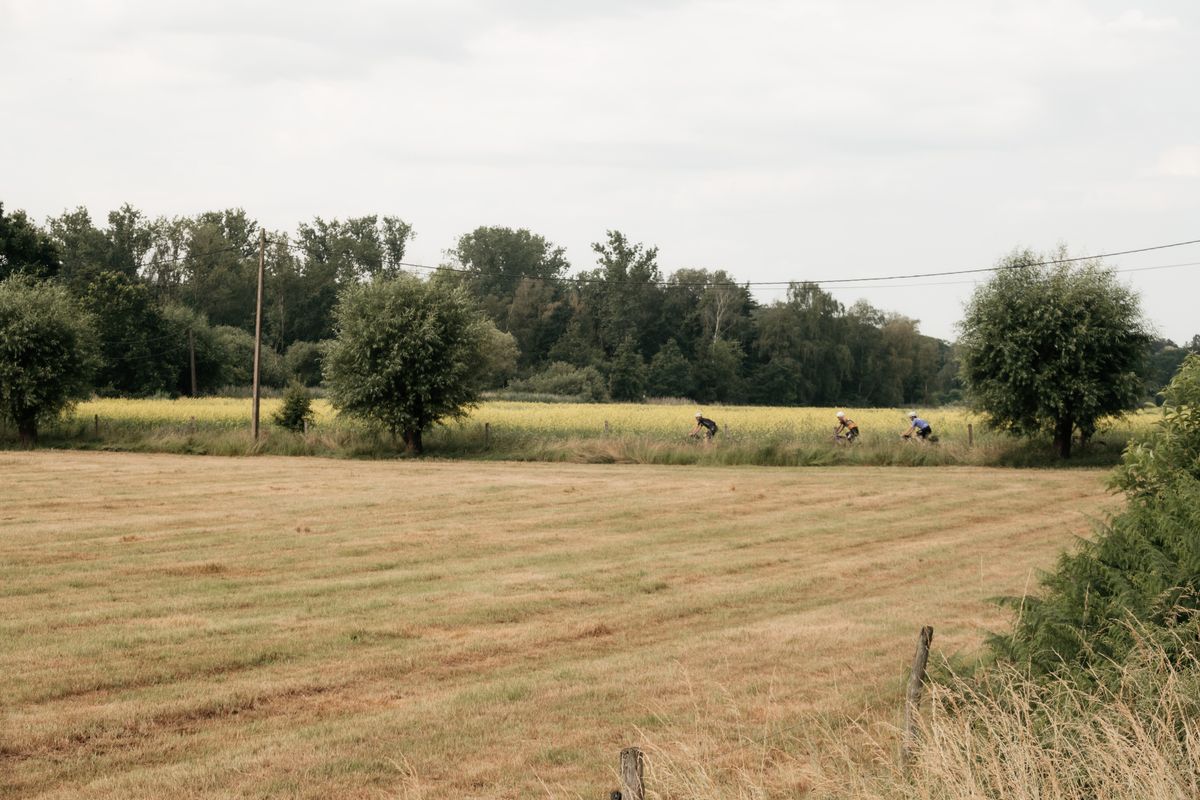
During Eddy’s Gravel Ride, attentive riders may have noticed something remarkable. Jochim Aerts, CEO of BCF, was riding a striking prototype: a gravel bike equipped with 32-inch wheels. Within the gravel community, interest in this larger wheel size is growing rapidly. The engineers at Belgian Cycling Factory are therefore actively working on their own prototype to thoroughly explore the potential of 32-inch wheels in a gravel context.
The breakthrough of 32-inch wheels came in 2025, when mountain bikers appeared with this larger setup during reconnaissance rides of World Cup courses. “What started as a niche experiment quickly evolved into an interesting avenue for further development,” says Aerts. “Internally, we also acted quickly. Behind the scenes, our R&D team immediately began developing an initial gravel bike based on this wheel size.”
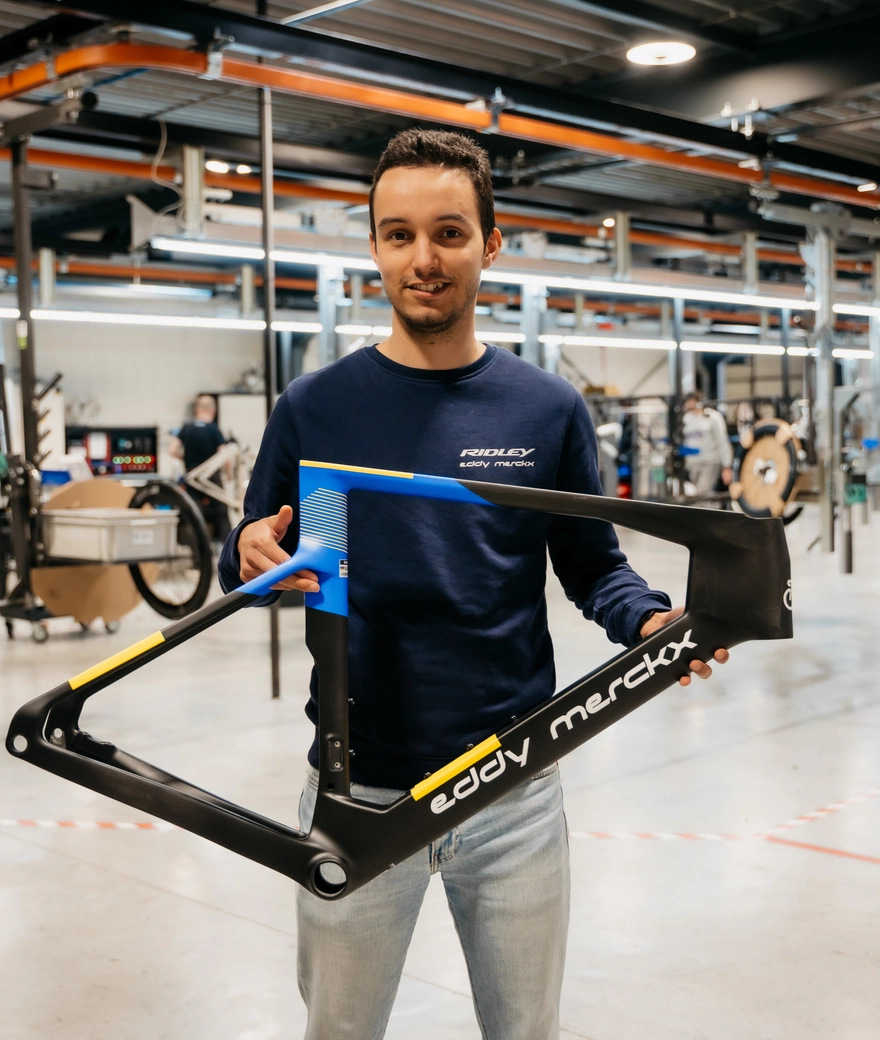
This proved to be no simple task. Larger wheels require a completely redesigned geometry, adapted tire widths, and a careful selection of components to maintain optimal ride balance. The project has now reached an advanced testing phase, where extensive real-world experience is being gathered. “I find it important to stay closely informed about all trends, especially when it is not just an evolution but a potential revolution within the cycling industry. After several test rides, I am convinced that 32-inch gravel bikes will once again become a significant innovation,” Aerts adds.
The breakthrough of 32-inch wheels came in 2025, when mountain bikers appeared with this larger setup during reconnaissance rides of World Cup courses. “What started as a niche experiment quickly evolved into an interesting avenue for further development,” says Aerts. “Internally, we also acted quickly. Behind the scenes, our R&D team immediately began developing an initial gravel bike based on this wheel size.”
This proved to be no simple task. Larger wheels require a completely redesigned geometry, adapted tire widths, and a careful selection of components to maintain optimal ride balance. The project has now reached an advanced testing phase, where extensive real-world experience is being gathered. “I find it important to stay closely informed about all trends, especially when it is not just an evolution but a potential revolution within the cycling industry. After several test rides, I am convinced that 32-inch gravel bikes will once again become a significant innovation,” Aerts adds.

Advantages and challenges
Interest in 32-inch wheels is not without reason. The larger diameter offers several advantages for gravel riders. Once up to speed, the wheels maintain their momentum more easily. They also roll more efficiently over rough surfaces such as cobblestones, loose rocks, and root sections. Stability also increases noticeably, particularly during longer and faster gravel rides.
At the same time, the larger wheel size also presents challenges. The higher rotational mass makes acceleration less explosive. In addition, the wheel size requires a longer wheelbase and an adapted geometry to keep handling sharp, predictable, and dynamic. Furthermore, the availability of specific components is still limited today. This is precisely where the development team is currently focusing: finding the ideal balance between speed, control, comfort, and ride feel.
Belgian Cycling Factory continues to intensively test, refine, and further develop its prototypes. By evaluating multiple prototype geometries side by side, the team gathers valuable insights to determine the optimal configuration. “We are confident that we will find the perfect balance to bring a highly attractive 32-inch gravel bike to market,” concludes Aerts. With this development, Belgian Cycling Factory once again underlines its ambition to push boundaries and enable cyclists to ride faster, more efficiently, and more comfortably, regardless of the terrain.
At the same time, the larger wheel size also presents challenges. The higher rotational mass makes acceleration less explosive. In addition, the wheel size requires a longer wheelbase and an adapted geometry to keep handling sharp, predictable, and dynamic. Furthermore, the availability of specific components is still limited today. This is precisely where the development team is currently focusing: finding the ideal balance between speed, control, comfort, and ride feel.
Belgian Cycling Factory continues to intensively test, refine, and further develop its prototypes. By evaluating multiple prototype geometries side by side, the team gathers valuable insights to determine the optimal configuration. “We are confident that we will find the perfect balance to bring a highly attractive 32-inch gravel bike to market,” concludes Aerts. With this development, Belgian Cycling Factory once again underlines its ambition to push boundaries and enable cyclists to ride faster, more efficiently, and more comfortably, regardless of the terrain.